Edith Frank
Diary of Anne FrankEdith Frank, Anne Frank’s mother, appears in the diary both as a parent sharing the dangers and privations of Jewish life under German occupation and as the focus of Anne’s most sustained family conflict. Their relationship is marked by affection that Anne cannot readily accept, mutual hurt, and an unfinished movement toward understanding; Edith’s death in Auschwitz-Birkenau gives that unresolved bond a devastating historical end.
Identity and Family Life
Edith married Otto Frank when he was thirty-six and she was twenty-five. Their daughters were Margot, born in Frankfurt am Main in 1926, and Anne, born on June 12, 1929. When Otto moved to the Netherlands in 1933 to manage the Dutch Opekta Company, Edith followed him in September; the girls stayed with their grandmother in Aachen before joining their parents in the Netherlands. Anne’s account presents Edith first within this family history, but later entries show how life in hiding made the ordinary demands of parenting inseparable from confinement, danger, and the strain of close quarters.
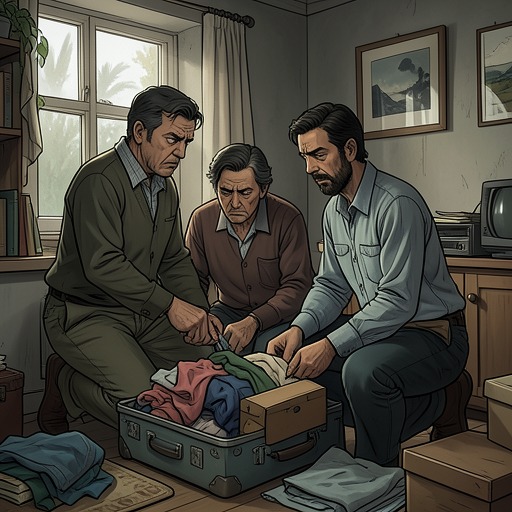
After Germany occupied the Netherlands, anti-Jewish decrees progressively narrowed the family’s life. Jews were required to wear a yellow star and were barred from public activities and many forms of transport, among other restrictions. The Frank family prepared to go into hiding, moving belongings out of their apartment over a period of months. Margot’s call-up notice forced them to advance their departure by ten days; Edith and Otto walked with Anne in the rain, carrying bags, toward the hiding place in Otto’s office building. In the Secret Annex, Edith shared the daily constraints of concealment with her family and the other residents. The diary’s account of scarcity later makes that pressure tangible: Anne describes days of spinach and potatoes, and the residents’ hunger while imagining the food at a wedding party they could not attend.
Distance and Conflict with Anne
Anne’s account of her mother is not static. In July 1942, she says that, despite the kindness shown to her for her birthday, she feels herself drifting away from both Edith and Margot. She is stung by what she sees as unequal treatment: after Margot breaks the vacuum cleaner, Edith criticizes her lightly, while Anne experiences the family’s praise and criticism of her as rapidly alternating. This small domestic comparison becomes evidence, for Anne, of a larger difference in how her mother responds to her and her sister.
The disagreements grow more intense. After a discussion about domestic help and Anne’s habit of imagining the future, Anne records that she cried and felt her mother did not understand even her ordinary thoughts. She contrasts Edith’s approach with Otto’s, saying that her father usually defends her and that without him she would find it hard to endure the situation. On another occasion, after an argument, Anne tells Otto that she loves him more than Edith. She recognizes that this preference is painful and unfair, but at the time she cannot bring herself to offer help when Edith is unwell, because she says she does not feel love for her. The diary preserves the extremity of a young person’s feelings without making them the whole story of the relationship.
A later quarrel sharpens the divide. Edith tells Otto about Anne’s faults; Anne cries and feels anger toward her mother, while also reflecting that she can imagine Edith’s death but cannot imagine her father’s. Anne writes that she hopes Edith will never read what she has written. Her diary thus becomes the private space where feelings she cannot express in the family are recorded in their harshest form, even as the wish to conceal those words indicates an awareness of their possible effect.
The Rejected Prayer and Its Aftermath
One night, Anne is waiting for Otto to come and say prayers with her when Edith enters and gently offers to listen instead. Anne refuses. Edith pauses at the bed, then turns at the door and says, “I don't want to be angry with you. I can't make you love me!” Anne sees her mother’s tears and recognizes that her coldness has caused her real pain. The scene does not resolve their conflict: Anne feels sorry for Edith, but also insists that she cannot pretend to pray with her when she does not feel able to do so.
Anne interprets the rupture through competing accounts of rejection. She says that Edith’s tactless comments and jokes have made her less responsive to signs of affection; she also understands, in that moment, that Edith is hurt by the absence of love she had not previously recognized in her mother. Otto’s reaction adds another pressure: Edith cries through the night, and Anne reads his avoidance of her gaze as silent disapproval. A private refusal at bedtime therefore exposes how deeply the conflict affects all three members of the family, without settling who has been most wronged.
Rereading and Reconsideration
By January 1944, Anne returns to her earlier diary entries and is shocked by the number and intensity of her accusations against Edith. Rather than simply erase them, she asks herself how she could have written about hatred and tries to understand the state of mind from which those passages came. She describes being caught in moods that narrowed her perspective, leading her to record her own anger and hurt without calmly considering what others had said or how she might have hurt them. The act of rereading changes the diary from a record of immediate feeling into evidence Anne can examine and reassess.
Her reconsideration does not amount to a simple reconciliation. Anne says she wants a mother who can set an example and be someone she respects; she feels Edith treats her more as a friend than as a daughter, and she objects to being teased when she cries. She recalls a childhood incident after a dentist visit: Edith and Margot went downtown without Anne because she had her bicycle, then laughed when she became upset. Anne remembers riding home and crying, and says the hurt still returns to her. Her account links present distance to accumulated, specific grievances, rather than to a single quarrel.
At the same time, Anne’s understanding of herself is changing. She reads an article about blushing and adolescence and recognizes that she is becoming an individual with her own thoughts and habits. Elsewhere she and Margot reflect that the family they once knew has lost its closeness: the adults treat them as children in outward matters even as the girls feel inwardly older. Anne’s growing insistence on independence helps explain why she wants respect and a model in her mother, but it does not make the rift disappear. The diary allows both claims to remain visible: the daughter’s sense of having been wounded and her later effort to account for the anger she directed at Edith.
Loss and Significance
The account of the relationship is shaped by the diary’s history as well as by what Anne wrote. Anne revised her private diary into a second version intended for publication, while continuing the original; after her arrest, the surviving manuscripts were given to Otto Frank, who selected and edited material for the first published version. Some passages about sexuality and unflattering descriptions of Edith and other residents were omitted from that initial edition. A later expanded edition restored additional material from Anne’s versions, offering readers a fuller view of the tensions Anne had recorded. Edith’s portrayal therefore reaches readers through a changing editorial history, and the expanded text preserves conflicts that an earlier selection softened or left out.
Edith died in Auschwitz-Birkenau on January 6, 1945, from hunger and exhaustion. The diary’s record of the family relationship ends before that death: Anne’s later attempts to explain her earlier anger cannot become a conversation between mother and daughter. The surviving entries instead hold together Edith’s care and sorrow, Anne’s resistance and need for respect, and Anne’s retrospective effort to see beyond her own perspective. Their relationship remains unresolved, made more poignant by the fact that the diary preserves both the injuries and the beginnings of a more reflective understanding.